Biologic Drug Analytics
Biotherapeutic Characterization Services
ProtaGene supports complex biologic drug programs with strong expertise in protein characterization method development. Aligned with ICH Q6B, our analytical characterization of biotherapeutics covers structural assessment, biological activity, and product and process impurities. We deliver the data needed from candidate selection through regulatory submission and commercial QC testing.
This enables successful development by defining critical quality attributes early and maintaining traceability across manufacturing, purification, and lifecycle changes.
Analytical Characterization of Biotherapeutics: What We Measure
Our phase-appropriate biologics characterization services support IND/IMPD and BLA/MAA needs with clear, decision-ready outputs. Analytical characterization applies complementary analytical methods and orthogonal techniques to define critical quality attributes and produce documentation suitable for regulatory submissions across markets. These analytical characterisation practices also help keep quality attributes consistent during process development, formulation development, and ongoing quality control.
Below are our core service areas for analytical characterization. For each program, the relevant characterization experiments identified during the initial assessment are aligned to your critical quality attributes and stage-appropriate deliverables.

Early- and Late-Stage Forced Degradation Studies
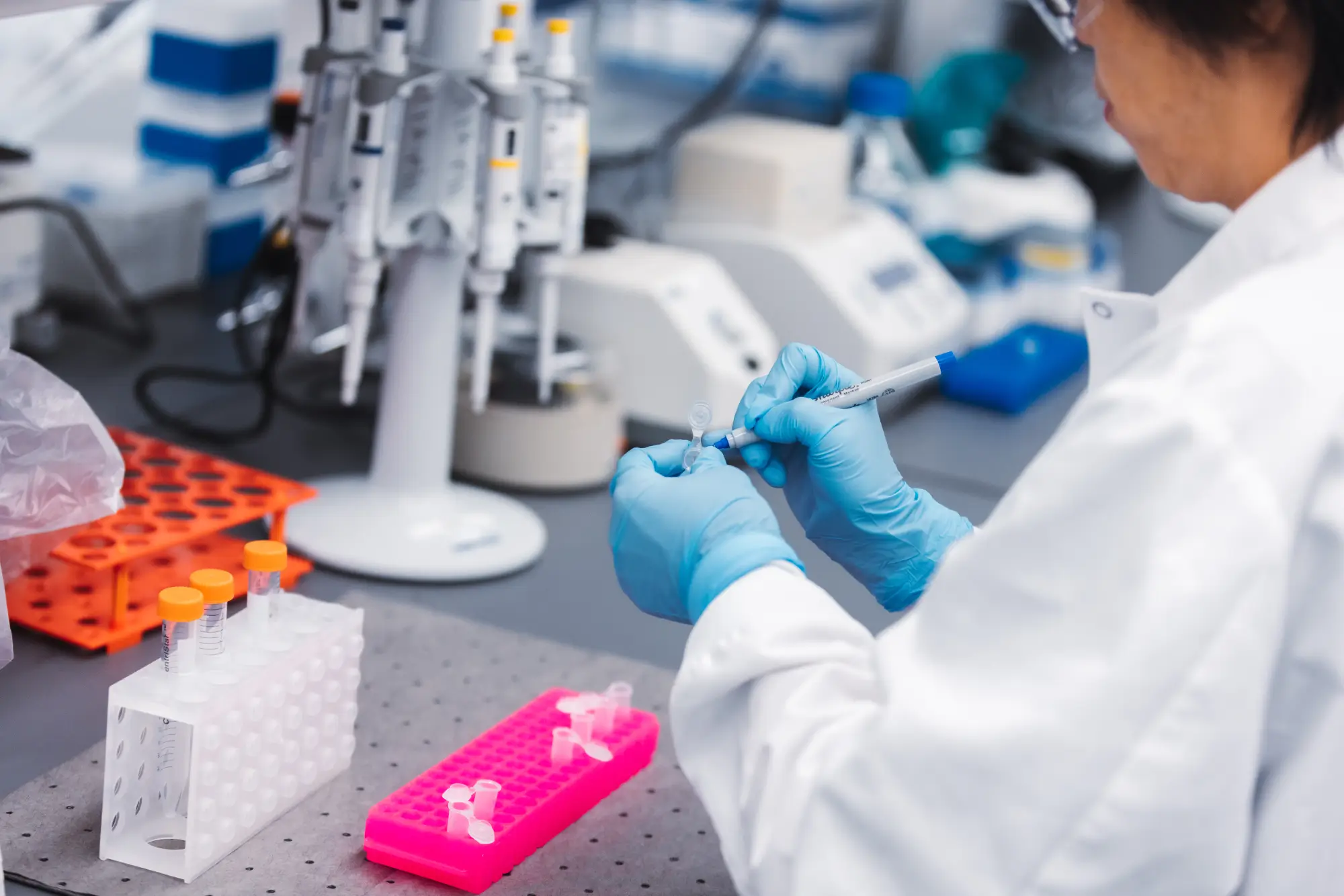
Forced degradation studies are conducted throughout development through the generation of stress samples and their subsequent analysis using high-resolution methods. These studies reveal product-specific degradation pathways and enable the identification and monitoring of critical quality attributes (CQAs) essential for the quality, safety, and efficacy of biologics.
Early-stage studies provide initial insight into product degradation, which is essential for identifying CQAs. In parallel, the generated stress samples are used for the selection and qualification of stability-indicating analytical methods.
Late-stage studies are designed to assess degradation kinetics under defined stress conditions, providing product-relevant insight into stability behavior and supporting the regulatory justification of specifications and lifecycle stability management.
-
Primary sequence and PTMs by mass spectrometry
-
Disulfide linkage mapping for disulfide bond characterization
-
N-glycosylation with targeted glycan analysis to perform targeted glycan screening when relevant
-
Amino acid analysis and extinction coefficient determination (supporting a quantitative method)
-
Size exclusion chromatography as a rapid and quantitative method for size and aggregation

Isolation and Characterization of Product-Related Isoforms and Impurities
Isolation and characterization of product-related isoforms and impurities are essential activities during biologics development to achieve a comprehensive understanding of product heterogeneity and its potential impact on critical quality attributes (CQAs).
The generation, enrichment, and analytical assessment of defined variants enable the establishment of structure–function relationships and support the definition of the product-specific impurity profile.
This knowledge is fundamental for meeting regulatory expectations for product characterization and for justifying specifications throughout development in support of a successful license application.
-
Intact and subunit analysis, plus additional mass spectrometry characterization as needed
-
Higher-order structure using different biophysical methods including AUC, CD, FTIR, and HDX-MS
-
PEGylation and antibody drug conjugates DAR mapping for complex formats
-
AEX-HPLC for surface charge profiling and quality attributes trending
-
Accelerated stability and thermal stability assessment, supplemented by nanoparticle tracking analysis where particle characterization is needed

Comparability Studies
Comparability studies are conducted throughout biologics development to demonstrate that manufacturing changes do not adversely affect the product in terms of quality, safety, or efficacy.
Comprehensive analytical assessment of critical quality attributes (CQAs) in a tiered approach provides the scientific basis to confirm product consistency before and after process modifications. In addition to the release panel, a broad set of extended characterization methods, including the characterization of potential variants, is applied to generate detailed product knowledge and support informed decision-making during development and process changes.
These studies are essential to meet regulatory expectations, enabling a robust demonstration that the product remains comparable and within the established quality profile despite process evolution during development and lifecycle management.
-
Head-to-head testing of pre-change and post-change samples
-
Generation of comparability acceptance criteria and subsequent evaluation
-
Support of a tiered comparability approach
-
Comprehensive analytical panel covering release analysis and extended characterization to evaluate potential structure–function impact
Analytical Solutions from Research to Market

Why ProtaGene for Biotherapeutic Characterization?
- Clear deliverables and regulatory-ready data packages for characterization of biotherapeutic programs
- Phase-appropriate characterization packages for IND/IMPD and BLA/MAA needs grounded in ICH Q6B scope across structure, activity, and impurities
- Novel analytical methods and orthogonal techniques applied where they add interpretability and confidence for critical quality attributes
- Structured project intake for successful development, including process development touchpoints when product and process impurities need to be linked
- Transparency on commercial or financial relationships upon request, to keep governance and procurement workflows smooth
Biologic Therapeutics Platform Expertise
Our deep experience advancing a diverse range of therapeutic platforms from research through market help the ProtaGene team design highly effective analytical programs that de-risk development and accelerate timelines to your next key milestones. Key biologic development areas include:
-
Recombinant proteins—including complex, highly glycosylated proteins
-
Multi-subunit complexes—protein, nucleotide, ligand
-
mAbs
-
ADCs and protein conjugates
-
PEGylated proteins
-
Bispecifics/multispecifics
-
Fusion proteins
-
Enzyme replacement therapies
-
Biosimilars
-
Vaccines, including subunit/recombinant







































































































































































Analytical Systems
Enabled by state-of-the-art technology, ProtaGene offers an extensive range of analytical capabilities to support your biotherapeutic or gene & cell therapy projects.






































































































































































Subscribe to Our Email List
Talk to Our Biotherapeutic Characterization Experts
Planning biotherapeutic characterization or scoping the analytical characterization of biotherapeutics for your next milestone? Share your stage and modality, and our team will help map the right attribute package for your program, from candidate selection to commercial product QC testing.
Contact Us