Cell & Gene Analytics
Long-Read Sequencing Services
ProtaGene provides specialized long-read sequencing services for cell and gene therapy programs. Built on Oxford Nanopore sequencing technology, our platform delivers ultra-long reads that resolve complex genomic regions, structural variants, and full-length transcript isoforms that short-read sequencing methods cannot capture. From sample preparation through bioinformatics analysis, we generate the sequencing data your program needs to move forward with confidence.
Discover the Power of Long-Read Sequencing
Long-read sequencing is transforming how scientists characterize gene therapy products. Unlike conventional genome sequencing, which reconstructs DNA or RNA from short fragments, long-read sequencing technologies read thousands of bases in a single pass. This enables direct detection of structural variants, base modifications like DNA methylation, and complete gene structure without the gaps left by traditional methods.
Watch the video to explore how our long-read sequencing solutions can support your development program.
In this video, we address the following key questions and concepts:
-
Why we invest in long-read sequencing and how it advances genomic research for cell and gene therapy
-
What sets Oxford Nanopore Technologies (ONT) sequencing apart from other sequencing platforms
-
How ONT technology works at the single-molecule level, from sample to data
-
Which assays we offer and the key advantages they bring to your projects
-
Where the future of sequencing technology is headed and how we are preparing for the next breakthroughs
Our ONT Sequencing Assays and Services
Our Oxford Nanopore sequencing services are purpose-built for the analytical challenges of cell and gene therapy development. Each assay leverages the full read length and single-molecule resolution of nanopore sequencing to deliver data that short-read methods cannot provide.
Reach out to explore our full portfolio of specialized analytical workflows, including:

Vector Production Impurity Profiling
Comprehensive characterization of vector production impurities requires sequencing methods that capture both long fragments and complex rearrangements in a single pass. Our long-read sequencing approach delivers the resolution needed to detect low-abundance contaminants and structural anomalies that whole-genome sequencing with short reads cannot reliably resolve. The resulting data supports consistent monitoring across manufacturing campaigns and provides the evidence base for process optimization decisions.
-
Detection and quantification of residual host-cell DNA fragments
-
Identification of truncated, rearranged, or chimeric vector genomes
-
Profiling of process-related contaminants and packaging artifacts
-
Batch-to-batch comparison of impurity signatures across production campaigns

High-Resolution Integration Site Mapping
Precise mapping of vector integration sites in the host genome is critical for safety assessment of gene therapy products. Long-read sequencing resolves the full-length sequence of the integrated vector, including truncations or deletions, enabling characterization of each integrant at the target site, as well as the full genomic context surrounding each integration event, including repetitive regions and structural variants at insertion loci that limit short-read sequencing accuracy. Our nanopore-based integration site analysis delivers high-resolution data for preclinical and clinical sample characterization, supporting regulatory submissions with clear, decision-ready results.
-
Mapping of insertion loci with full upstream and downstream genomic context
-
Resolution of repetitive regions and structural variants at integration sites
-
Characterization of clonal integration patterns across sample timepoints
-
Deliverables aligned to regulatory submission requirements for preclinical and clinical stages

Transcript Isoform and Splice-Variant Analysis
Understanding transcript diversity is essential for confirming that your therapeutic gene is expressed as intended. Long-read sequencing captures entire RNA molecules from start to finish in a single read, eliminating the reconstruction artifacts inherent in short-read RNA sequencing. This provides a direct, unbiased view of gene expression at the transcript level.
-
Full-length transcript sequencing without fragmentation or computational assembly
-
Identification and quantification of alternative splicing events and splice-variant diversity
-
Direct measurement of isoform ratios from your sample material
-
Detection of unexpected transcript variants, including truncations and read-through events
Analytical Solutions from Research to Market
Why ProtaGene for Long-Read Sequencing?
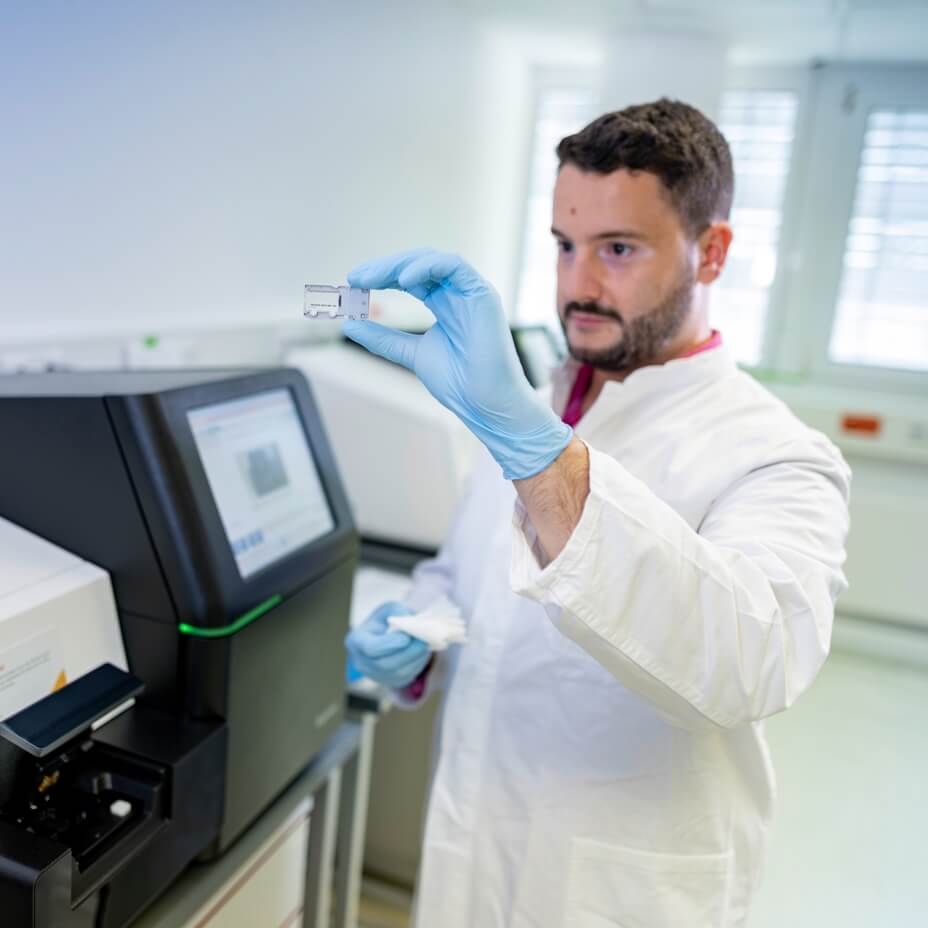
- Oxford Nanopore sequencing operated by scientists with hands-on experience across AAV, lentiviral, and non-viral vector platforms
- End-to-end workflow from sample preparation and library construction through nanopore sequencing and bioinformatics analysis, all under one roof
- Validated methods for genomic DNA extraction, library preparation, and flow cell loading optimized for gene therapy sample types
- Integrated bioinformatics pipeline for genome assembly, structural variant detection, integration site mapping, and transcript isoform identification
- Data packages structured for regulatory submissions, with clear deliverables aligned to your development stage
- GxP-compliant quality systems and documentation standards
Cell and Gene Therapeutic Platform Expertise
Our deep experience assembling a broad range of cell and gene therapy platforms from research through commercialization helps the ProtaGene team design highly effective analytical programs that de-risk development and accelerate timelines to your next key milestones. Key cell and gene therapy platform development areas include:
-
Capsid-based Vectors
- AAVs (Multiple Serotypes and Engineered Vectors)
- Novel Systems
- Adenovirus
-
Complex, Envelope Vectors
- Lentivirus
- Gammaretrovirus
- Novel Viruses
-
Non-viral Vectors
- Polynucleotide (RNA/DNA) Formulations
- Lipid Nanoparticles
- Transposons
- Plasmids
-
Genetic Engineering
- TALEN
- CRISPR/Cas9
- Zinc-finger Nucleases







































































































































































Analytical Systems
Enabled by state-of-the-art technology, ProtaGene offers an extensive range of analytical capabilities to support your biotherapeutic or gene & cell therapy projects.




































































































































































Subscribe to Our Email List
Talk to Our Long-Read Sequencing Experts
Planning long-read sequencing for vector characterization, integration site mapping, or transcript analysis? Share your sample type, development stage, and analytical objectives, and our team will recommend the right nanopore sequencing workflow for your program, from early discovery through commercial manufacturing.
Contact Us